Six key takeaways for hospital waiting room advertising
- Healthcare environments naturally bring together diverse communities, shaped by geography rather than choice.
- Differences in language, culture and lived experience can affect how health messages are understood and trusted.
- Trust plays a critical role, particularly in communities with different experiences of healthcare systems.
- Healthcare environments help overcome barriers by providing credibility, context and access to professionals.
- Representation and relevance are essential for communication to resonate and drive action.
- Effective campaigns are built around understanding real-world behaviours, not assumptions.
Why diversity in healthcare environments is different to anywhere else
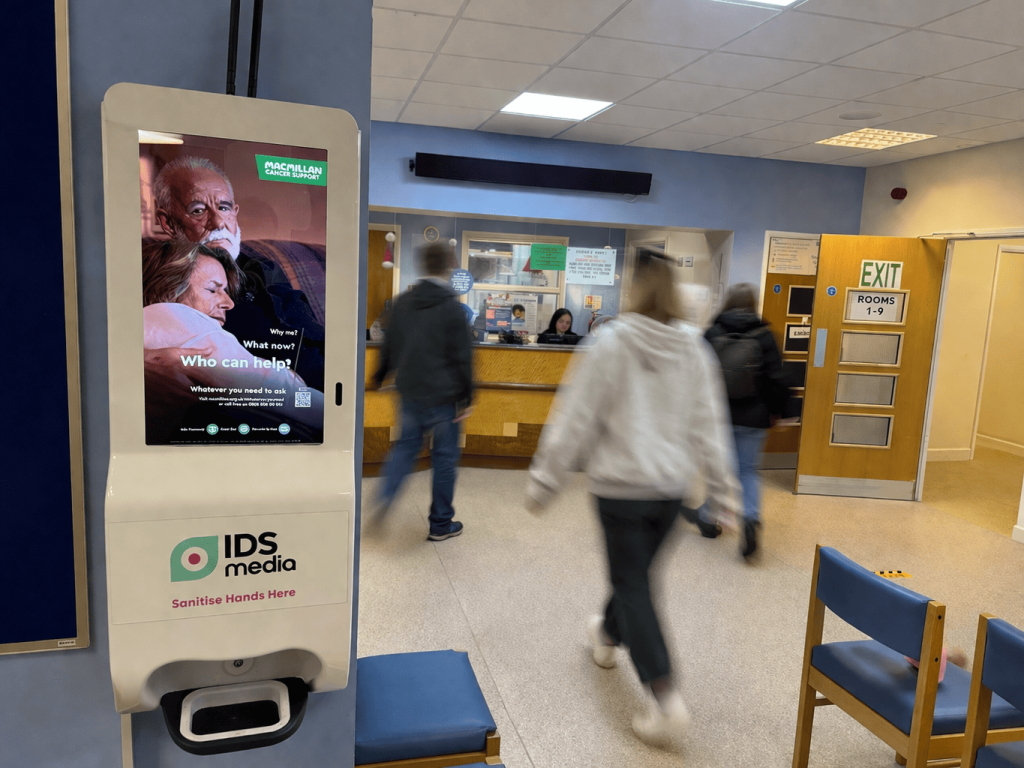
When organisations talk about “diverse communities”, it’s often in broad or abstract terms. But in healthcare environments, diversity is something much more immediate and visible.
“It means we’ve got a multi-cultural audience,” explains Dean Gahagan, Joint Managing Director at IDS Media.
“If you think about GP surgeries, patients aren’t selected – it’s based on where you live.”
That creates a very specific dynamic.
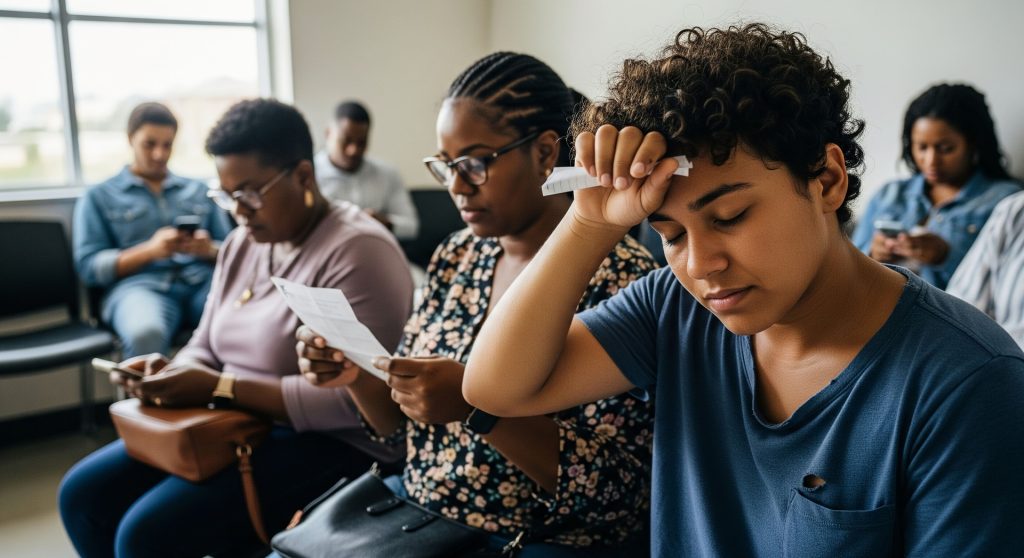
“You’ll have every sort of culture, race, religion within that area coming into the same space,” he says.
“So, you end up with a very diverse waiting room. People with different health concerns, but also different backgrounds, languages and needs.”
That’s what makes healthcare environments unique.
You’re not targeting a segment.
You’re communicating within a space where diversity already exists.
Why communication breaks down across diverse communities
The challenge isn’t reaching people. It’s being understood.
“Just putting a message in front of someone doesn’t mean it’s going to land,” explains Dean.
There are multiple layers that influence how communication is received:
- Language and literacy.
- Cultural understanding of health.
- Previous experiences with healthcare systems.
- Levels of trust in institutions.
“If people don’t understand it, or don’t trust it, they won’t act on it,” he says. “That’s where many campaigns fall short – not because they lack visibility, but because they assume one message will work for everyone.”
The role of trust in healthcare communication
Trust plays a defining role in how different communities engage with health messaging.
And that trust isn’t evenly distributed.
“Different communities have different relationships with healthcare,” explains Dean.
For some:
- Healthcare environments are trusted.
- Information is accepted and acted on.
For others:
- There may be hesitation.
- Or a need for reassurance.
This is where healthcare environments become critical.
“Being in a GP surgery or hospital carries weight,” says Dean. “You’ve already got that credibility just by being there.”
Healthcare environments also benefit from significantly higher levels of trust than other channels.
YouGov research shows that 86% of patients trust GP practices, compared to just 4-5% for traditional media like TV, social and print.
That difference matters.
Because in diverse communities, where trust can vary, the environment itself becomes part of the message.
Why healthcare environments help overcome barriers
One of the advantages of healthcare environments is that they bring communication closer to action.
“You’re reaching people when they’re already thinking about their health,” says Dean.
Being in that mindset creates an opportunity to:
- Reinforce messages.
- Prompt questions.
- Support conversations with healthcare professionals.
“The best outcome is when someone sees something and then speaks to a healthcare professional about it,” he says.
This is where behaviour starts to shift.
Research shows that 62% of patients take action after seeing health information in a GP setting, with nearly half acting on the same day.
That immediacy is difficult to replicate in other channels.
For diverse communities, the interaction becomes even more valuable because it allows for:
- Clarification.
- Reassurance.
- And personalised understanding.
Why representation and relevance matter
One of the biggest factors in effective communication is whether people recognise themselves in the message, not just linguistically, but visually and culturally.
“If it doesn’t feel relevant, people won’t engage with it,” explains Dean.
But in practice, this is where many campaigns fall down. It’s not just about language. It’s about what people see.
“If you’re trying to reach a specific community, but the imagery doesn’t reflect them, it creates a disconnect straight away,” he says.
“That disconnect can be subtle, but it’s powerful. People don’t always actively reject the message. They simply don’t recognise it as being for them.”
This is when relevance is lost.
Effective communication needs to reflect the audience in every aspect of the execution:
- Imagery.
- Cultural context.
- Tone and framing.
“Relevance isn’t a detail,” says Dean. “It’s what determines whether a campaign gets noticed or ignored.”
What effective communication looks like in practice
From Dean’s experience, the most effective campaigns are the ones that adapt to the audience in front of them, not the audience assumed on paper.
“It all comes down to understanding the audience properly,” he explains.
That means:
- Keeping messaging clear and simple.
- Avoiding overly complex or clinical language.
- Making information easy to act on.
But also:
- Considering language needs.
- Reflecting cultural context.
- Ensuring messaging feels inclusive.
One example comes from a campaign delivered with the National Kidney Federation, targeting South Asian communities.
“We developed materials in Urdu for areas with a high South Asian population,” says Dean.
The campaign focused on kidney health and genetic risk, with messaging designed specifically for communities more likely to be affected.
“People could actually understand it,” Dean explains. “And they could relate to it. That shift, from translation to relevance, is what drives engagement.”
Language isn’t always optional – it’s essential
In some cases, adapting communication isn’t just best practice, it’s required.
“In Wales, we have to produce materials in both English and Welsh,” says Dean.
It affects everything from posters to leaflets.
“You might have the top half written in English and the bottom half in Welsh,” he explains. “Or one side of a leaflet designed in English and the other in Welsh.”
It’s a simple example – but it highlights an important principle: Communication only works if people can understand it fully.
“If it’s not in your first language, you’re more likely to doubt what you’ve read,” says Dean. “And if you’re unsure, you’re less likely to trust it.”
Targeting underserved communities requires a different approach
Some campaigns require a deeper level of behavioural understanding.
“For example, we worked on a campaign with Prostate Cancer UK targeting Black men aged 45+,” explains Dean.
This group faces a higher risk but is also less likely to visit a GP.
“That creates a challenge,” says Dean. “How do you reach people who aren’t engaging with healthcare in the first place?”
The answer isn’t always direct.
Instead, campaigns often work through:
- Family.
- Friends.
- Community influence.
“You’re creating a ripple effect,” says Dean. “If someone close to them sees it and starts that conversation, that’s where it can make a real difference.”
YouGov research shows that 83% of patients are likely to share helpful health information with others.
In diverse communities, that kind of sharing can be the difference between awareness and action.
Inclusion isn’t simple, and it’s not always perfect
Designing inclusive communication isn’t always straightforward.
“We’ve even explored things like Braille on leaflets,” explains Dean, “but that raised practical questions.
“How would someone know which leaflet has Braille? How would they find it in the first place?”
Those questions prompted a wider rethink.
Instead of relying on one feature alone, materials were designed to be easier to identify and use more broadly – through clearer layouts, larger text and simpler presentation.
This helped the leaflet work for:
- People with partial sight loss.
- Companions supporting someone else.
- Anyone needing clearer information in that environment.
The experience reinforced a broader lesson:
Inclusion isn’t a checkbox. It needs to be thought through in context.
What doesn’t work and why campaigns fail
Many campaigns fail for the same reason. They assume visibility equals effectiveness. But that’s not how communication works in diverse environments.
“If it doesn’t connect, it won’t land,” explains Dean.
Common mistakes include:
- Overcomplicated messaging.
- Lack of cultural relevance.
- One-size-fits-all approaches.
These issues create barriers, even in environments where attention and trust already exist.
This is what makes healthcare environments such a powerful channel – not just a place where messages are seen, but where they are understood, discussed and acted on.
IDS Media helps organisations deliver targeted, insight-led healthcare campaigns that drive meaningful action.
Get in touch to find out how we can support your next campaign.
Source: YouGov research