Six key takeaways for hospital waiting room advertising
- Older adults are rarely managing a single condition. Most are living with multiple health issues at the same time.
- Healthcare environments are one of the most effective ways to reach this audience due to frequency of visits and trust in the setting.
- Decision-making is often shared, with carers, family members and healthcare professionals playing a key role.
- Digital exclusion means traditional channels like print and face-to-face communication remain critical.
- Messaging must prioritise clarity, realism and authority to build trust and drive action.
- Campaign success is driven by relevance, simplicity and alignment with the patient’s real-world situation.
Why older audiences are more complex than they appear
It’s easy to think of older adults as a single audience group.
But in reality, they’re one of the most complex groups to communicate with – particularly within healthcare environments.
“Older adults don’t just come into healthcare settings with one problem,” explains Dean Gahagan, Joint Managing Director at IDS Media. “They’ve often got multiple health issues going on at the same time.”
This idea of comorbidities is critical.
Rather than managing one condition, many older patients are balancing:
- Joint issues.
- Cardiovascular conditions.
- Diabetes.
- Respiratory problems.
- And other long-term health concerns.
Data supports this.
Long-term conditions affect around 80% of people aged 65 and over, highlighting just how common this layered health profile is.
That changes how communication needs to work.
“You’re not talking to one issue,” says Dean. “You’re talking to a combination of them.”
Why healthcare environments matter more for older audiences
Because of this complexity, older adults interact with healthcare environments more than most.
“They’re the highest frequent attenders,” Dean explains. “They’re in and out of GP surgeries and hospitals regularly.”
That creates a unique opportunity.
Unlike other channels, healthcare environments offer:
- Repeated exposure.
- A health-focused mindset.
- Immediate relevance.
And critically, trust.
Older audiences are more likely to:
- Trust healthcare professionals.
- Trust printed information.
- Trust messaging that appears within an NHS setting.
That trust shapes how messages are received.
“You’ve already got that implied endorsement just by being in that environment,” says Dean.
Decision-making is rarely done alone
Another key difference when communicating with older adults is how decisions are made.
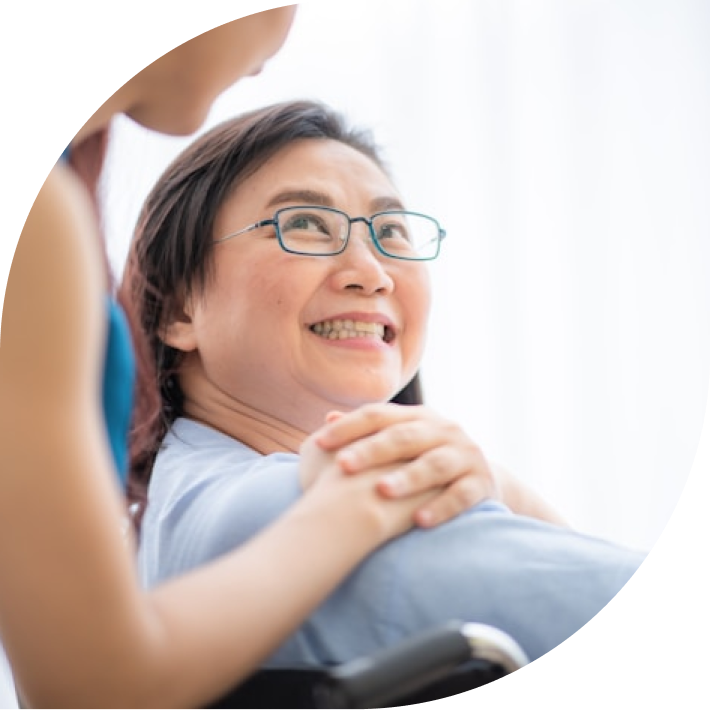
“It’s not always the patient making the decision,” Dean explains. “You’ve often got companions – sons, daughters, carers – who are heavily involved.”
These companions:
- Interpret information.
- Provide reassurance.
- Guide next steps.
“A lot of the time, they’re the guiding force,” says Dean. “This creates a broader audience dynamic.
“You’re not just communicating with the individual. You’re communicating with the patient, the person supporting them and often, the healthcare professional.”
The role of healthcare professionals in driving action
Healthcare professionals (HCPs) play an important role for older audiences.
“They’ve got automatic respect,” says Dean. “The moment they say something, people listen.”
This creates a powerful interaction between messaging and conversation.
“The best outcome is when someone sees something and then speaks to an HCP about it,” says Dean. “And the HCP reinforces it – that’s when action happens.”
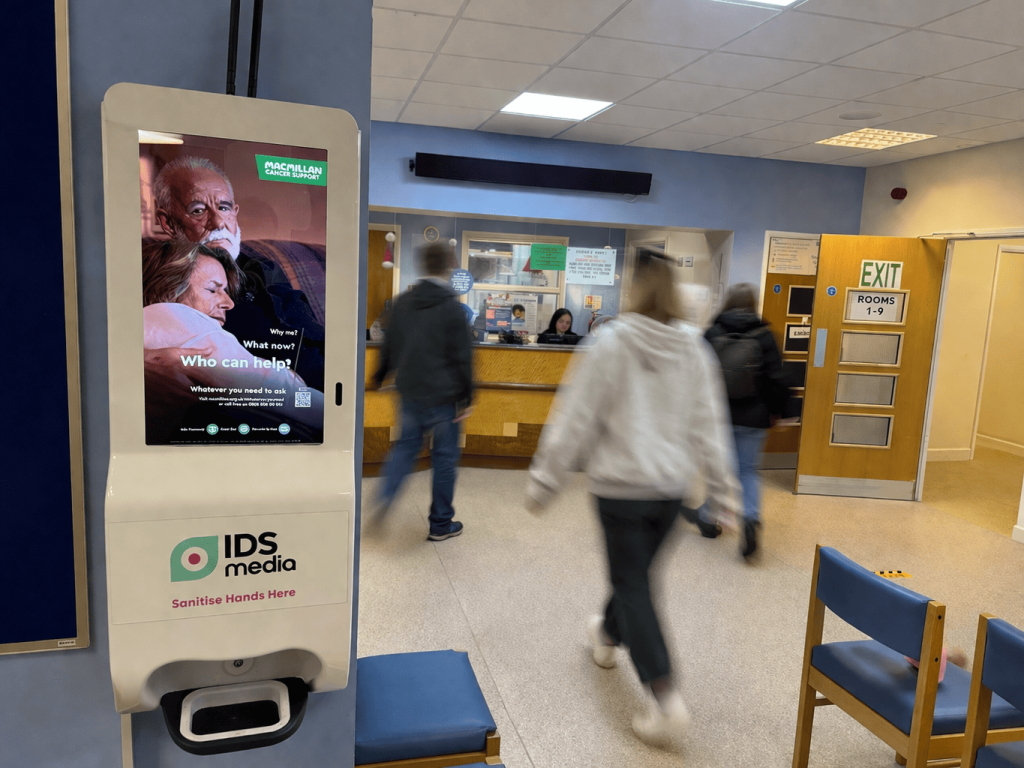
One example of this in practice was a shingles vaccination campaign delivered in healthcare environments.
“A shingles vaccine campaign ran for three consecutive years,” says Dean. “It was really successful. But the impact went beyond awareness. It prompted conversations between healthcare professionals and patients about whether they were eligible for the vaccine.”
That matters because eligibility isn’t always widely understood.
In the UK, the shingles vaccine is offered free on the NHS to older adults, particularly those aged 70 to 79, with eligibility now expanding from age 65.
Yet many patients don’t realise they qualify.
That’s where the environment plays a critical role.
By placing messaging within GP waiting rooms and healthcare settings, the campaign didn’t just inform, it triggered action.
“It wasn’t just about people seeing the message,” says Dean. “It was about getting them to ask the question.”
That interaction, between patient and healthcare professional, is where the real impact happens.
It supported NHS objectives by:
- Increasing awareness of eligibility.
- Prompting conversations at the point of care.
- Driving uptake of the vaccine.
“It wasn’t just about people seeing the message,” Dean adds. “It was about getting people vaccinated.”
Another example comes from care home campaigns targeting older audiences and their families.
“Care home campaigns have worked really well for us,” says Dean. “We’ve had situations where they’ve started with a small number of GP placements, and then come back and said, ‘this has worked so well – can we just book for the year?’”
While formal metrics aren’t always available, the response from clients is clear.
“It’s one of those areas where the demand speaks for itself,” he explains.
The reason comes back to timing.
“It’s the opportune moment in the patient journey,” says Dean. “People are often at that stage where they’re starting to struggle, whether it’s mobility, health, or needing more support.”
That moment is often triggered within healthcare environments.
“You might go to a GP and be told you need more help,” he explains. “And if you’ve already seen local care home options in that environment, it becomes something you seriously consider.”
Crucially, the decision isn’t made by one person.
“It’s not just the elderly individual,” says Dean. “It’s their partner, their family, their carers, they’re all part of that decision.”
That shared context is what makes the environment so powerful.
“You’ve got the right people, in the right place, at the right time, all thinking about the same thing.”
Digital exclusion and the importance of channel choice
One of the biggest challenges in reaching older audiences is digital exclusion.
“They’re not always as digitally confident as younger generations,” explains Dean. “A lot of older people aren’t using QR codes or online systems in the same way.
“That has a direct impact on how campaigns need to be delivered.”
Older audiences are more likely to engage with:
- Printed leaflets.
- Posters.
- Phone-based calls to action.
Rather than:
- Apps.
- QR codes.
- Online-only journeys.
“If you rely on digital alone, you’re going to miss a large part of that audience,” says Dean. “You’ve got to give older people something they can actually use – something they can pick up, read, or act on there and then.”
What effective messaging looks like for older audiences
Because of these factors, messaging needs to be adapted.
“It has to be clear, simple and easy to understand,” explains Dean.
That means:
- Avoiding overly complex language.
- Using readable fonts and accessible formats.
- Providing clear next steps.
But clarity alone isn’t enough. Trust is critical.
“Older people respond well to facts, figures, research and recognised institutions,” he says. “Things like NHS endorsement make a big difference.”
Why realism matters in campaigns
One of the most common mistakes in campaigns targeting older adults isn’t just the tone, it’s how the message is presented.
“We’ve seen examples where the imagery just isn’t relatable,” explains Dean. “Using young models for things like stairlifts – it just doesn’t connect.”
In healthcare environments, people are looking for information that reflects their reality.
If the design, imagery or context feels off, the message is easy to dismiss.
“You need people to see themselves in the message,” says Dean.
That means thinking beyond copy alone and focusing on the full execution:
- Age-appropriate visuals.
- Real-life scenarios.
- Practical, relatable solutions.
Why simplicity drives confidence
Another key factor is how information is presented.
“Too much information can overwhelm people,” says Dean.
For older audiences, effective communication:
- Reduces confusion.
- Builds confidence.
- Supports action.
“It’s about giving them what they need to make a decision,” explains Dean. “Not everything all at once”
The biggest misconception about older audiences
One of the biggest misconceptions is that older audiences are harder to engage.
But that’s not the case.
“The biggest mistake is thinking they don’t have spending power or won’t engage,” explains Dean.
In reality, older people are:
- Highly engaged.
- Highly attentive.
- And highly motivated when something is relevant.
The difference is how communication is delivered.
Why marketing to older adults requires a different approach
What this ultimately comes down to is understanding the reality of how older people experience healthcare.
- It’s not a single condition.
- It’s not a single decision.
- And it’s rarely a single moment.
It’s a combination of:
- Ongoing health needs.
- Multiple influences.
- And decisions that build over time.
“You’ve got to understand their reality,” says Dean. “If you do that, everything else follows.”
That’s what separates effective campaigns from those that get ignored.
Not visibility. Not volume.
But relevance to what’s actually happening in people’s lives.
IDS Media helps organisations deliver targeted, insight-led healthcare campaigns that drive meaningful action.
Get in touch to plan your next campaign.
Sources
NHS England – Frailty resources
https://www.england.nhs.uk/ourwork/clinical-policy/older-people/frailty/frailty-resources
Age UK – Later Life in the United Kingdom (2019)
NHS – Shingles vaccination guidance